Same-Game Parlay Touchdown Bets: Pricing Correlated Returns
 Available in US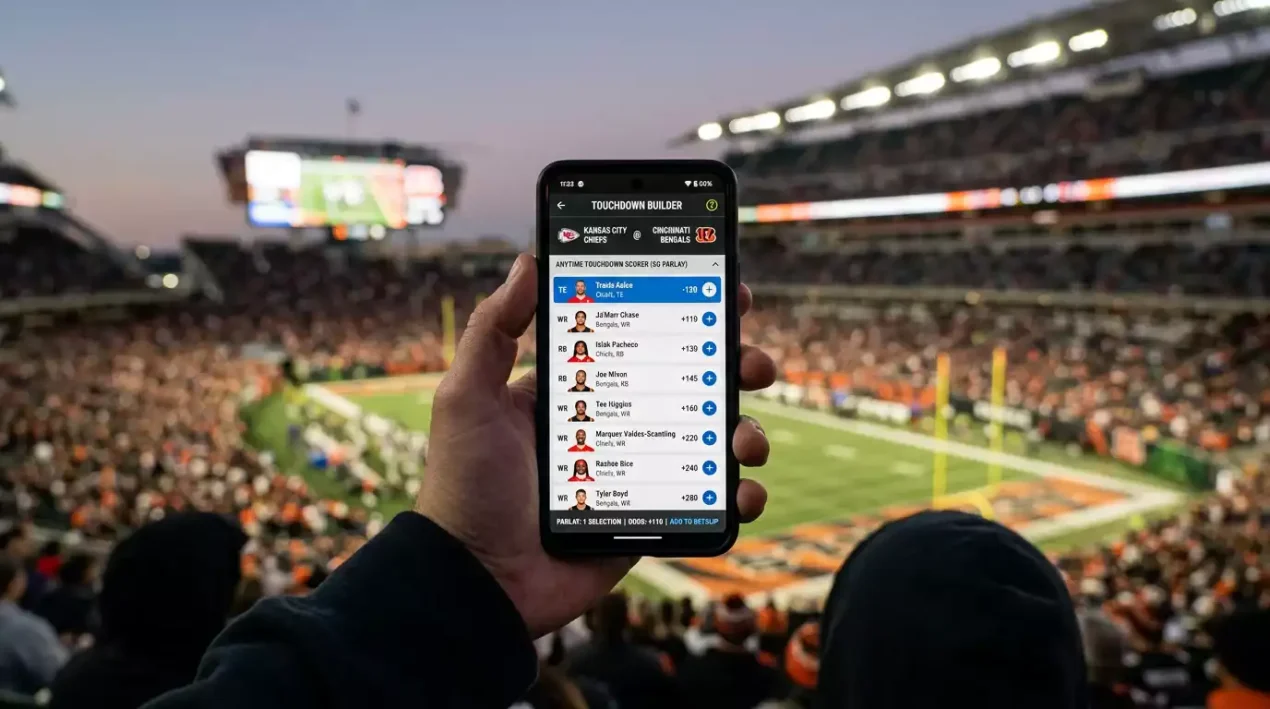
Same-game parlays — sometimes called bet builders or same-game multis depending on the bookmaker — are one of the fastest-growing bet types in the UK market. They let you combine touchdown scorer picks, yardage props, and game-level markets from a single NFL fixture into one accumulator. The UK’s remote gambling sector generated £7.8 billion in gross gambling yield in the 2024-25 period, and SGPs have contributed meaningfully to that growth by giving punters a product that feels personalised and exciting. But excitement and value are different things, and the gap between them is where the bookmaker’s margin lives.
SGP Pricing Mechanics for Touchdown Props
In a standard accumulator, combining picks from different games is straightforward. Each outcome is independent, so the bookmaker simply multiplies the individual odds together. Your three-leg acca at 2.00, 2.50, and 3.00 pays 15.00. Clean, transparent, easy to verify.
Same-game parlays work differently because the legs aren’t independent. If you combine “Player A anytime TD” with “over 48.5 total points” from the same game, those two outcomes are positively correlated. A high-scoring game makes it more likely that any individual player scores. The bookmaker knows this and adjusts the combined price downward to account for the correlation.
The adjustment process is opaque. Unlike standard accumulators where you can verify the maths yourself, SGP pricing runs through proprietary algorithms that estimate the degree of correlation between your selected legs and reduce the payout accordingly. You can’t see the individual adjusted prices — you only see the final combined odds the bookmaker offers. This lack of transparency is the first red flag. When you can’t verify the maths, you can’t verify the value.
For TD scorer legs specifically, the correlation adjustments can be substantial. Combining two TD scorers from the same game doesn’t pay as much as the same two players would in a cross-game accumulator, because if the game turns into a shootout, both players benefit simultaneously. The bookmaker captures that shared upside by reducing your payout.
The Hidden Margin Inside SGP Pricing
I ran an experiment over twelve weeks last season. Each week, I identified two TD scorer picks I wanted to combine. I priced them as a standard two-leg accumulator across games with one bookmaker, and then priced the same two-player combination as an SGP from a single game with the same bookmaker. The standard acca consistently paid 8-15% more than the SGP for what I estimated to be similar or identical true probabilities.
That 8-15% gap is the hidden margin. It sits on top of the margin already baked into each individual TD prop’s odds. When you place a single anytime TD bet, the bookmaker’s margin might be 5-8% (the difference between the implied probability and the true probability). When you place an SGP combining two TD props, you’re paying that 5-8% on each leg plus an additional correlation markup on the combination. The total effective margin on a two-leg TD SGP can exceed 15-20%.
The anytime TD scorer prop is the most popular player prop by betting volume, which means bookmakers have strong incentive to build attractive-looking SGP products around it. The higher the volume flowing through SGPs, the more the hidden margin compounds into bookmaker revenue. This doesn’t mean SGPs are never worth placing — it means you need to be realistic about the structural disadvantage you’re accepting when you choose this format over a standard accumulator built from separate games.
TD Combinations That Make Sense in SGPs
Despite the margin headwind, there are situations where SGP TD combinations offer defensible value. The key is finding legs whose correlation works in your favour and isn’t fully captured by the bookmaker’s adjustment algorithm.
The strongest SGP TD combination I’ve found is pairing a running back from the favoured team with a wide receiver from the underdog. The game script logic supports both: the favourite builds a lead and runs the ball (benefiting the RB), while the trailing team is forced to pass aggressively (benefiting the WR). These two outcomes are driven by the same game dynamic but affect different teams and positions, which some SGP algorithms may not fully correlate.
Another combination worth considering is pairing a TD scorer with a yardage prop for a different player. If you believe the game will be high-scoring, combining “RB anytime TD” with “WR over 75.5 receiving yards” from opposite teams creates a bet that benefits from the same high-scoring environment but through different mechanisms. The correlation is real but indirect, and the pricing adjustment may not fully capture it.
The combinations to avoid are the obvious ones. Two TD scorers from the same team in the same game is heavily correlated and heavily marked up. A TD scorer combined with “over” on the game total is so transparently linked that the bookmaker’s algorithm will extract maximum margin. And any SGP with four or more TD legs is a payout fantasy — the combined margin makes it virtually impossible to find long-term value.
When Standard Accumulators Beat SGPs
Most weeks, a standard cross-game accumulator is the better vehicle for combining TD picks. The maths is transparent, the margins are lower, and the independence between legs means your edge on each pick compounds cleanly. I use SGPs sparingly — once or twice a month when a specific game setup creates a combination I can’t replicate across separate games.
The practical test I apply is simple. Before placing an SGP, I price the same legs as individual singles and calculate what the standard acca would pay. If the SGP pays within 5% of that number, the combination might be worth taking for convenience. If the gap exceeds 10%, I break the bet apart and place the legs separately. That 10% threshold has saved me meaningful money over the course of a season, and it takes less than a minute to check.
Do same-game parlays offer worse odds than standard accumulators for TD props?
In most cases, yes. SGPs include a correlation adjustment that reduces the combined payout below what you’d receive from a standard accumulator of the same legs across different games. The margin difference typically ranges from 8-15% on two-leg TD combinations, and it increases with additional legs. The convenience of combining picks from one game comes at a measurable cost.
Which UK bookmakers have the best SGP builders for NFL?
Most major UK bookmakers now offer SGP or bet builder products for NFL games. The quality varies in terms of available markets, pricing competitiveness, and how many TD scorer options are included. Rather than choosing a bookmaker based on their SGP product alone, compare the final SGP price across multiple operators for the same combination — the differences can be significant, and the bookmaker offering the best standard odds doesn’t always offer the best SGP price.
This material was created by the Endzone Edge team.
Related posts

NFL Playoff Touchdown Props: How Postseason Football Changes the TD Equation
NFL TD Prop Record Keeping: How to Track Your Bets and Measure Your Edge