NFL UK Fan Growth and Its Impact on Touchdown Betting Markets
 Available in US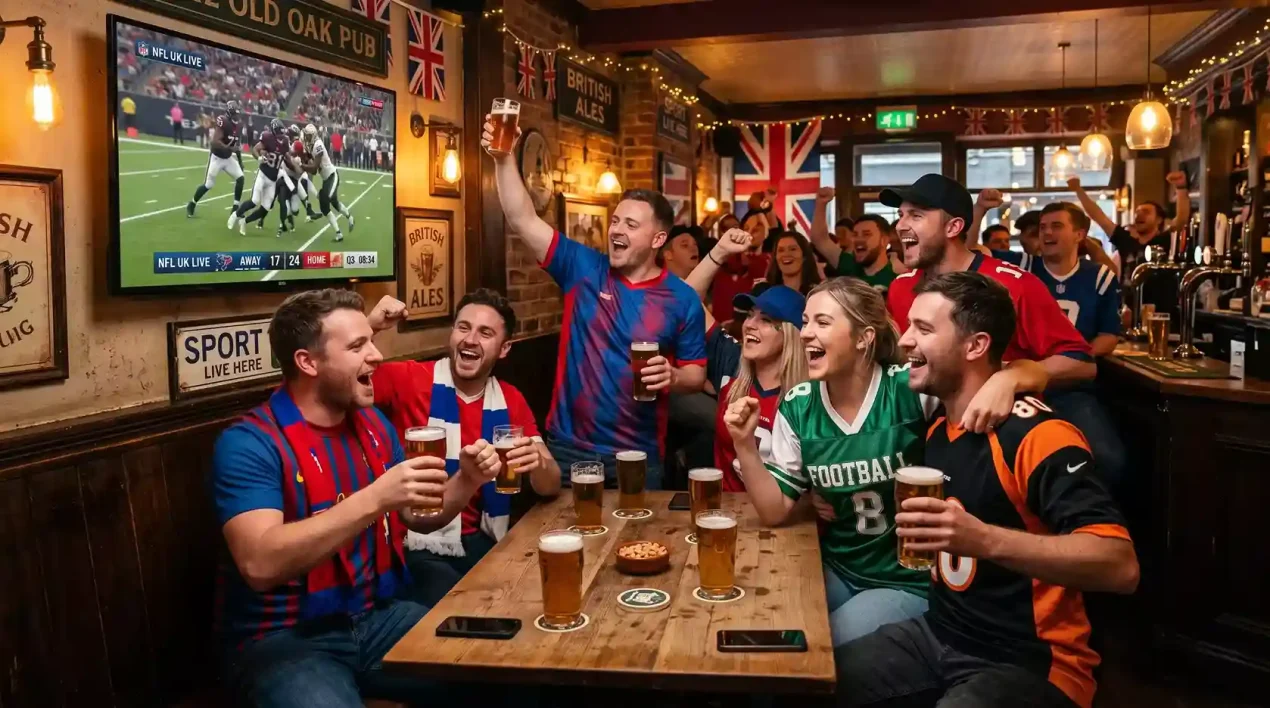
Nine years ago, when I started placing NFL TD bets seriously, finding another person in the UK who cared about anytime touchdown odds was like finding someone who collected stamps — rare and slightly eccentric. The landscape has shifted dramatically. Super Bowl LX attracted 5.2 million viewers in the UK, a record that would have been unthinkable a decade ago. The growth of American football in this country has moved from niche curiosity to genuine mainstream entertainment, and for those of us who bet on touchdown props, this expansion has tangible consequences.
UK NFL Viewership: From Niche to Mainstream
The numbers tell a story of acceleration. Super Bowl LVIII drew 3.4 million UK viewers in 2024, which itself felt like a landmark moment. Two years later, Super Bowl LX added nearly two million more, reaching that 5.2 million figure. Henry Hodgson, the NFL’s General Manager for the UK, described the viewership growth alongside social engagement during Super Bowl week as a testament to the NFL’s expansion in the country, particularly among the younger demographic the league has targeted.
That youth dimension is the most remarkable part. Viewership growth among younger audiences has surged by 91% — nearly doubling the audience in a demographic that typically resists traditional live sports broadcasting. This isn’t passive growth driven by one or two viral moments. It’s structural, supported by expanded broadcast coverage on Sky Sports, free-to-air Super Bowl broadcasts, and the NFL’s own digital platforms that cater to mobile-first consumption habits.
For the TD betting market specifically, growing viewership means growing volume. More viewers means more people interested in placing bets. More bets means more liquidity in TD prop markets. More liquidity means tighter spreads and more competitive pricing from bookmakers fighting for handle. The UK audience’s expansion has directly contributed to the depth and competitiveness of NFL TD prop offerings from British bookmakers — a transformation you can see in the number of players listed, the variety of TD markets available, and the speed at which lines are posted each week.
The growth isn’t confined to the Super Bowl, either. Regular-season London Games now draw millions of viewers across Sky Sports and other platforms, and the weekly Sunday afternoon coverage consistently pulls audiences that would have seemed implausible five years ago. The NFL has become appointment television for a meaningful slice of the UK population, and that consistency — week after week, not just for the marquee events — is what drives sustained betting volume rather than one-off spikes.
How UK Bookmakers Are Responding to NFL Demand
Five years ago, most UK bookmakers treated NFL props as an afterthought. The prop menu for a standard Sunday afternoon game might list six or eight players for anytime TD, with limited or no coverage for first TD scorer, last TD scorer, or 2+ touchdowns. Today, the top-tier UK operators list twenty or more players per game across multiple TD market types, with same-game parlay builders that include TD legs alongside yardage and game-level markets.
This expansion is a direct response to demand. The UK’s remote gambling sector generates £7.8 billion annually, and NFL is claiming a growing slice of that revenue as the sport’s audience expands. Bookmakers that invested early in NFL coverage — building dedicated American football trading teams, posting lines earlier in the week, and offering competitive odds — have captured market share from slower-moving competitors. The result is a competitive ecosystem where five or six major operators are actively vying for UK NFL bettors’ money, which benefits punters through better pricing and more varied market offerings.
The technology stack has improved too. NFL game data, injury reports, and lineup information now feed into UK bookmaker platforms in near real-time, which supports faster and more accurate TD prop pricing. Live in-play TD markets, which were patchy or nonexistent for NFL a few years ago, are now available on most major platforms. The infrastructure supporting NFL betting in the UK has matured in step with the audience, creating a market that’s increasingly sophisticated for punters who take their analysis seriously.
The competitive dynamics between bookmakers have also shifted. Five years ago, an operator could offer mediocre NFL prop coverage without losing customers, because there weren’t enough alternatives. Today, the punter who finds thin player coverage or slow line updates on one platform can instantly switch to a competitor with a better offering. This competitive pressure has been the single biggest driver of improvements in UK NFL betting quality — the bookmakers aren’t investing in NFL because they love the sport, they’re investing because losing handle to a competitor is expensive.
Youth Engagement and Future Market Expansion
The 250,000 children across the UK now participating in flag football programmes represent the next generation of NFL consumers — and, eventually, bettors. This grassroots pipeline ensures that the audience growth isn’t a temporary spike driven by a single compelling Super Bowl but a sustained trajectory supported by genuine participation in the sport.
For the TD betting market, this pipeline means that demand will continue to grow over the next five to ten years. As today’s flag football participants become tomorrow’s adult viewers and bettors, the volume flowing through NFL prop markets will expand further. Bookmakers are already positioning for this future by securing broadcast partnerships, sponsoring NFL content creators, and building educational content that introduces new fans to prop markets through touchdown bets — the simplest and most intuitive entry point to NFL wagering.
Social media plays a role in this expansion that shouldn’t be underestimated. NFL highlights, touchdown celebrations, and player content circulate on Instagram, TikTok, and YouTube at enormous scale, and UK engagement with this content has grown in parallel with viewership. For younger fans, the players they follow on social media become the players they want to bet on, which drives a self-reinforcing cycle of engagement. The bookmakers that integrate social content into their NFL offerings — through embedded highlights, player profile pages, and shareable bet slips — are capturing this demographic more effectively than those relying on traditional sportsbook interfaces.
The growth also means that the analytical edge available in UK NFL TD markets may narrow over time. A larger, more sophisticated audience produces more informed bettors, which forces bookmakers to sharpen their lines. The mispricing opportunities that exist today — particularly on lower-profile players and less popular TD market types — may not persist indefinitely. For those of us who have been building our analytical frameworks during this window of growth, the advantage of being established before the market fully matures is an asset that compounds over time. And as London Games continue to drive engagement, the connection between UK-hosted NFL fixtures and local betting markets will only deepen.
How many people in the UK watch NFL regularly?
NFL viewership in the UK has grown significantly. Super Bowl LX attracted 5.2 million viewers, a UK record, while regular-season London Games drew over 6 million viewers in 2025 across broadcast platforms. Weekly NFL coverage on Sky Sports regularly draws audiences in the hundreds of thousands, with peak viewership during primetime games and playoff fixtures.
Has UK bookmaker NFL coverage improved with growing viewership?
Substantially. Five years ago, most UK bookmakers offered limited NFL prop coverage with a handful of players per game. Today, major operators list twenty or more players across multiple TD market types, offer same-game parlay builders, and provide live in-play TD markets. The competitive pressure from growing NFL handle has driven significant improvements in market depth, pricing competitiveness, and the speed at which lines are posted.
This material was created by the Endzone Edge team.
Related posts
NFL Playoff Touchdown Props: How Postseason Football Changes the TD Equation
NFL TD Prop Record Keeping: How to Track Your Bets and Measure Your Edge