NFL London Games TD Betting: How UK-Based Fixtures Affect Touchdown Props
 Available in US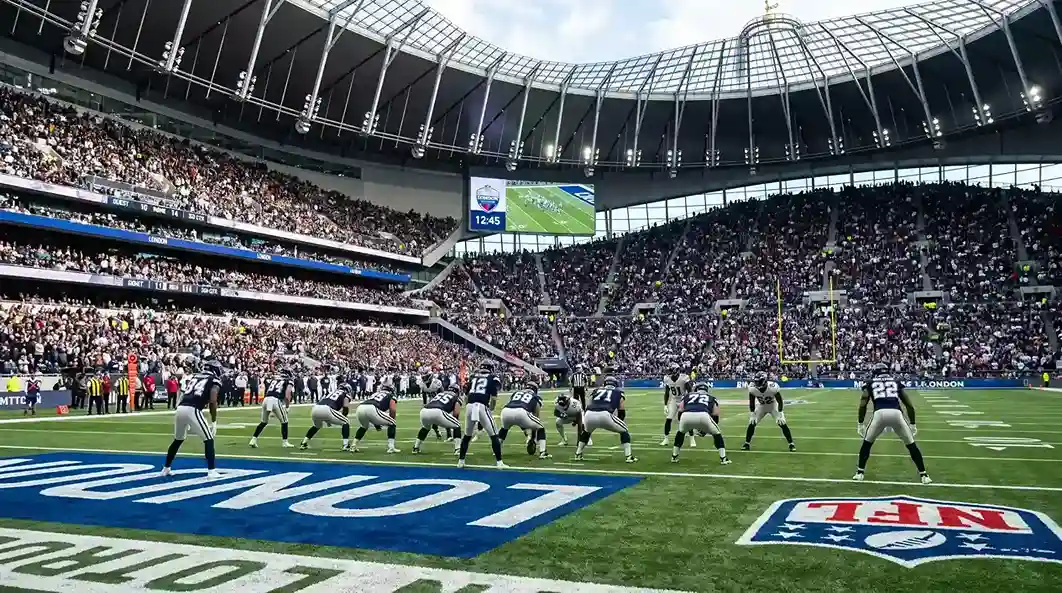
There’s nothing quite like watching NFL live in London. The atmosphere at Tottenham Hotspur Stadium is electric, the crowd is engaged in a way that American regular-season games sometimes aren’t, and the whole experience reminds you why you fell in love with this sport in the first place. Over 6 million viewers tuned into the 2025 London Games broadcasts, making them among the most-watched NFL events in UK history. But from a TD prop perspective, London Games are a different animal. The factors that influence scoring — travel, venue, timing, and roster management — create a unique analytical challenge that doesn’t map neatly onto standard regular-season frameworks.
As Henry Hodgson, the NFL’s General Manager for the UK, has noted, London has been at the centre of the league’s global growth priority for longer than any other international market. That commitment means the London Games aren’t going away — they’re expanding. For UK punters, that expansion means more opportunities to bet on games played on home soil, but those opportunities reward preparation and penalise assumptions.
Travel Fatigue and Its Effect on Scoring
Both teams in a London Game have crossed the Atlantic, but the impact of that crossing isn’t equal. Teams that travel to London on Tuesday or Wednesday and spend the full week acclimatising tend to perform closer to their season-average level. Teams that arrive Thursday or later — either by choice or due to scheduling constraints — show more signs of disruption in their early-game execution.
The travel effect shows up primarily in the first half. Teams adjusting to the time change tend to start slowly, with lower-than-expected scoring in the first and second quarters. By the second half, as adrenaline and game flow take over, the scoring patterns normalise. For first TD scorer props, this means the opening period of a London Game is less predictable than the same window in a US-based game. If you’re considering a first TD pick, recognise that you’re adding travel-related variance on top of the normal uncertainty inherent in that market.
Passing offences appear to suffer more from travel fatigue than rushing attacks. The precision required for timing routes and defensive reads is harder to maintain when circadian rhythms are disrupted, while running plays rely more on physicality and simple assignments. This mirrors the Thursday Night Football pattern — when preparation is compromised, the ground game becomes relatively more reliable. I give a modest positive adjustment to running back TD props in London Games and a corresponding negative adjustment to wide receiver props, particularly in the first half.
It’s also worth checking each team’s travel history in the weeks surrounding the London fixture. A team that played on the road the previous week, then flew directly to London from the East Coast, has had a less disruptive journey than a West Coast team that flew home from a road game, spent two days at their facility, and then made the transatlantic trip. These travel logistics are publicly available through schedule analysis, and while the effect is subtle, it adds another data point to your pre-game TD assessment for London fixtures.
Tottenham Stadium: Field and Conditions
The Tottenham Hotspur Stadium was purpose-built to host both football and NFL, with a retractable grass pitch that reveals a synthetic NFL surface underneath. The playing surface is high quality and well-maintained, so there’s no significant surface advantage or disadvantage for either team. Both are playing on an unfamiliar field, and the synthetic turf plays faster than many natural grass fields in the US, which can slightly benefit speed-oriented offences.
Weather is a factor, but not in the way many American commentators assume. London in October — when most London Games are scheduled — is mild by NFL standards. Temperatures typically sit between 10-15 degrees Celsius, wind is usually moderate, and heavy rain is possible but not guaranteed. Compared to late-season games in Green Bay, Chicago, or Buffalo, London’s autumn weather is benign. I don’t apply a significant weather adjustment to London Games unless the specific forecast calls for unusual conditions.
The stadium atmosphere does warrant consideration. London crowds are loud and enthusiastic but less tactically knowledgeable than most home crowds in the US. The crowd noise can disrupt visiting team communication — but in a London Game, both teams are effectively “visiting,” so the noise effect is neutral. Neither team gets a genuine home-field advantage, which removes one of the standard variables from your TD prop analysis. For the punter, this neutrality is actually helpful — you can evaluate both offences on equal terms without needing to discount one side’s TD production for an away-game penalty.
Scoring Trends from Past London Games
I’ve tracked every London Game’s scoring output since the series began, and the results don’t support the assumption that these games are low-scoring affairs. The average total points in London Games has been within one or two points of the overall NFL season average, with enough variation game to game that no strong directional trend emerges.
What does emerge is a pattern in how touchdowns are scored. London Games produce a slightly higher proportion of rushing touchdowns relative to the season average, consistent with the travel fatigue effect on passing accuracy. Running backs with established goal-line roles have been reliable TD candidates in London, while wide receivers have been slightly less productive than their season-average rates would predict.
The game-level totals in London have been varied enough that you shouldn’t assume a low-scoring contest. Several London Games have produced high-scoring, entertaining affairs with six or more touchdowns, while others have been defensive struggles. The key analytical takeaway isn’t about total volume — it’s about the method. When a London Game does produce scoring, that scoring skews toward the ground game more than a comparable US-based fixture would. For your TD analysis, this means weighting running back props slightly higher and receiver props slightly lower, rather than avoiding London Games entirely.
The youth pipeline feeding UK interest in the sport continues to grow, with 250,000 children across the country now participating in flag football programmes. That grassroots engagement drives a fan base that’s increasingly knowledgeable about the game’s details — including prop markets. As the UK audience for London Games becomes more sophisticated, the betting volume on these fixtures will continue to rise, which should gradually improve the efficiency of London Game TD pricing over time. For now, though, the market remains less sharp than standard regular-season games, and that inefficiency is where the value lives.
Do NFL London Games typically produce fewer touchdowns than US-based games?
Not significantly. London Games have averaged total points within a point or two of the overall NFL season average. The perception of lower scoring is likely influenced by a few memorable defensive battles rather than a consistent trend. Individual game totals vary widely, just as they do for US-based fixtures.
Does jet lag noticeably affect touchdown scoring in London NFL games?
The effect is subtle but measurable. First-half scoring in London Games tends to be slightly lower than the season average, particularly for passing touchdowns, as teams adjust to the time change. Second-half scoring typically normalises. Teams that arrive earlier in the week show less disruption than those arriving closer to game day.
Where can UK punters watch London Games for live TD betting?
London Games are typically broadcast live on Sky Sports and the NFL Game Pass on DAZN in the UK, with selected games also available on free-to-air channels. Kick-off times are usually early afternoon UK time — 2:30pm or 6pm — making them the most accessible NFL games for UK viewers and live bettors.
This material was created by the Endzone Edge team.
Related posts
NFL Playoff Touchdown Props: How Postseason Football Changes the TD Equation

NFL TD Prop Record Keeping: How to Track Your Bets and Measure Your Edge