Quarterback Rushing TD Bets: Pricing Mobile Playmakers
 Available in US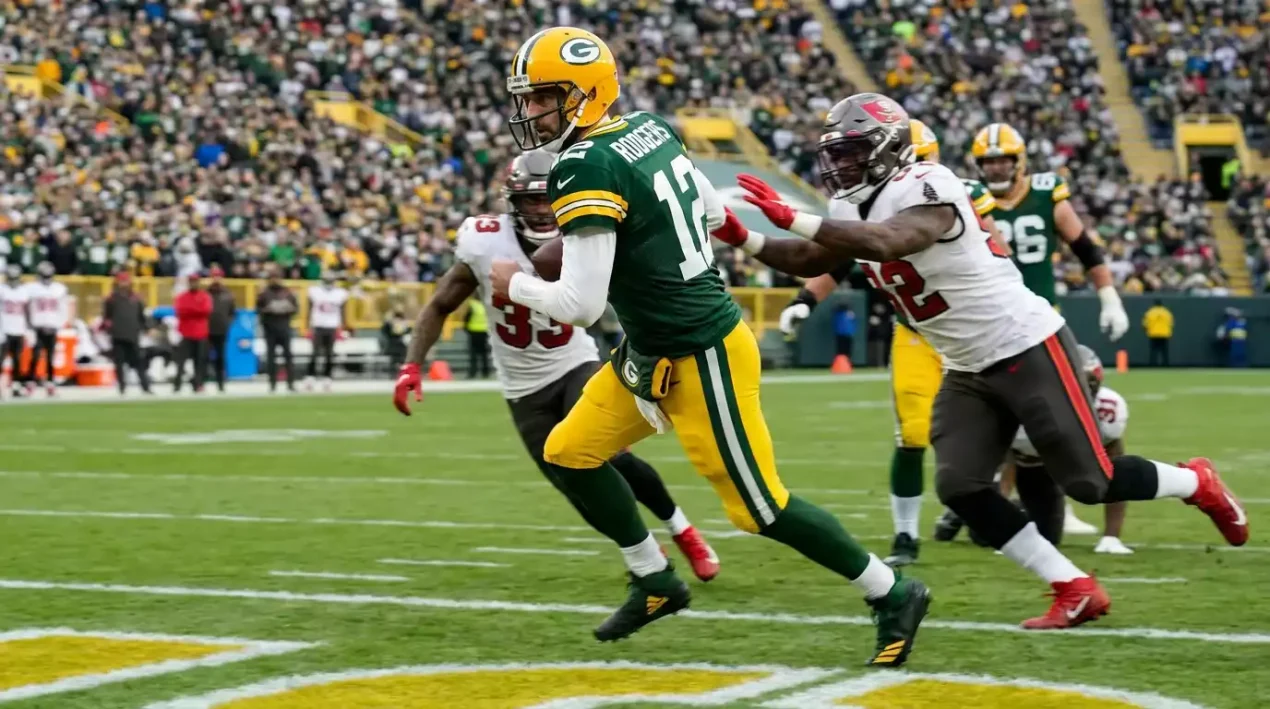
A mobile quarterback’s usage heavily depends on the game script and match flow, especially when trailing late in the fourth quarter.
Market Separation for Quarterback Rushing Statistics
I remember the 2020 season being the turning point for how I thought about quarterback props. Lamar Jackson, Kyler Murray, and Josh Allen were all scoring rushing touchdowns at rates that rivalled many running backs. Yet their anytime TD odds were often longer than those of running backs with similar or even lower scoring frequencies. The market was slow to catch up.
The reason QB rushing TDs exist as a separate analytical category is the quarterback exception in anytime TD scorer rules. Since passing touchdowns are credited to the receiver, not the passer, a quarterback’s path to winning a TD prop is fundamentally different from every other position. He needs designed runs, scramble opportunities, or the occasional trick-play reception. This distinction creates a subset of quarterbacks whose TD prop odds are worth analysing — and a much larger group of pocket passers whose props should be avoided entirely.
The anytime TD scorer market is the most popular player prop by handle, and that popularity extends to quarterback rushing TD props for mobile QBs. Bookmakers have become better at pricing these props over the past few seasons, but the market still offers value when you know where to look.
Dual-Threat QB Profiles That Score on the Ground
Not every quarterback who occasionally scrambles is a viable TD prop candidate. The distinction I draw is between true dual-threat quarterbacks — players whose rushing ability is a designed feature of the offence — and pocket passers who happen to be athletic enough to escape pressure occasionally.
True dual-threat QBs share three characteristics that make them consistent rushing TD threats. First, their offences include designed quarterback runs as a core play type, not just a desperation option. Read-option, designed rollouts, and QB power are staples of their game plans. Second, they carry the ball frequently inside the red zone — typically three or more designed runs per game inside the 20-yard line. Third, they have a track record of goal-line rushing touchdowns, which indicates that their coaching staff trusts them to carry the ball in the most critical scoring situations rather than handing off to a running back. To put the opportunity in context, Jonathan Taylor led the NFL with 18 rushing touchdowns in 2025 — the elite dual-threat quarterbacks won’t match that volume, but they regularly produce eight to twelve rushing scores per season, which is enough to make their weekly TD props worth evaluating.
The profile that excites me most is the mobile quarterback on a team that also has a strong passing attack. When the defence is spread out defending receivers, the quarterback’s designed run becomes even more effective because there are fewer bodies in the box. These quarterbacks can score rushing touchdowns almost as a secondary benefit of their team’s passing game, which makes their scoring opportunities less predictable for defences and, consequently, more reliable for bettors.
Contrast that with a rushing quarterback on a weak passing team. Defences know the run is coming, stack the box, and reduce the quarterback’s rushing efficiency near the goal line. The raw rushing numbers might still look impressive, but the touchdown conversion rate drops because the defence is specifically game-planning to stop it. Context matters enormously here.
How Bookmakers Price QB Rushing TD Props
There’s an interesting pricing dynamic with quarterback rushing TD props that I’ve tracked over several seasons. Bookmakers tend to anchor their QB TD odds heavily to recent performance. A quarterback who has scored rushing touchdowns in three consecutive games will see his odds shorten considerably, often beyond what the underlying data supports. Conversely, a mobile quarterback who has gone three games without a rushing score will drift to longer odds, even if his designed run rate inside the red zone hasn’t changed.
This recency bias creates a predictable pattern. After a scoring streak, QB rushing TD props tend to be overpriced on the short side — the public piles in, the bookmaker shortens the odds, and the value evaporates. After a dry spell, the same props drift longer, and value emerges for anyone who has been tracking the underlying usage data rather than just the results.
My approach is to monitor three metrics week to week: designed QB runs inside the red zone, quarterback scramble rate on broken plays, and the team’s overall red-zone visit frequency. When a mobile quarterback is still running the ball five times per game inside the 20 but hasn’t scored in two or three weeks, his odds have likely drifted to attractive territory. That’s when I strike. The scoring will come — the volume demands it.
One more pricing nuance: primetime games tend to see shorter QB rushing TD odds because the public loves backing recognisable quarterbacks in nationally televised matchups. I’ve found that the best value on QB rushing props often sits in the early Sunday window, where public attention is more dispersed and pricing is less influenced by casual money.
When the Goal Line Belongs to the Quarterback
The goal line is where QB rushing TD value crystallises. Inside the five-yard line, where 47.3% of all red-zone touchdowns are scored, defensive formations compress and the quarterback’s ability to read the defence in real time becomes a lethal advantage. A mobile quarterback who sees the defence commit to stopping the running back can pull the ball on a read-option and walk into the end zone untouched.
Find all the statistical edges you need at the ultimate NFL touchdown betting resource.
I pay special attention to how teams use their quarterback inside the five. Some coaching staffs treat the QB run as a constraint play — they’ll call it once or twice a game to keep the defence honest, but the running back remains the primary scorer. Other staffs lean into the QB run at the goal line, calling designed sneaks, powers, and read-options that give the quarterback four or five scoring opportunities per game.
The teams that lean into it are where the consistent value sits. When a quarterback’s goal-line carry rate is comparable to his team’s running back, his TD prop odds should reflect that — and they often don’t, because the market still fundamentally prices quarterbacks as passers first. That perception gap is narrowing each season as bookmakers adjust, but it hasn’t closed entirely, and until it does, mobile QB rushing TD props remain one of the more reliable edges in the NFL prop market.
Do designed QB runs count for anytime touchdown scorer bets?
Yes. Any rushing touchdown by a quarterback counts for anytime TD scorer bets, whether it comes from a designed run, a read-option keeper, a scramble, or a quarterback sneak. The only type of quarterback touchdown that does not count is a passing touchdown, which is credited to the receiver who catches the ball, not the quarterback who threw it.
Which mobile quarterbacks have the highest rushing TD rates?
The quarterbacks with the highest rushing TD rates are typically dual-threat players whose offences feature designed quarterback runs as a core play type. Look for QBs with at least three designed runs per game inside the red zone and a history of goal-line carries. The specific names change each season, but the profile remains consistent: a mobile quarterback on a team that schemes runs specifically for him near the end zone.
This material was created by the Endzone Edge team.
Related posts
NFL Playoff Touchdown Props: How Postseason Football Changes the TD Equation
NFL TD Prop Record Keeping: How to Track Your Bets and Measure Your Edge