NFL Weather Impact on Touchdown Props: How Rain, Wind, and Cold Shift TD Patterns
 Available in US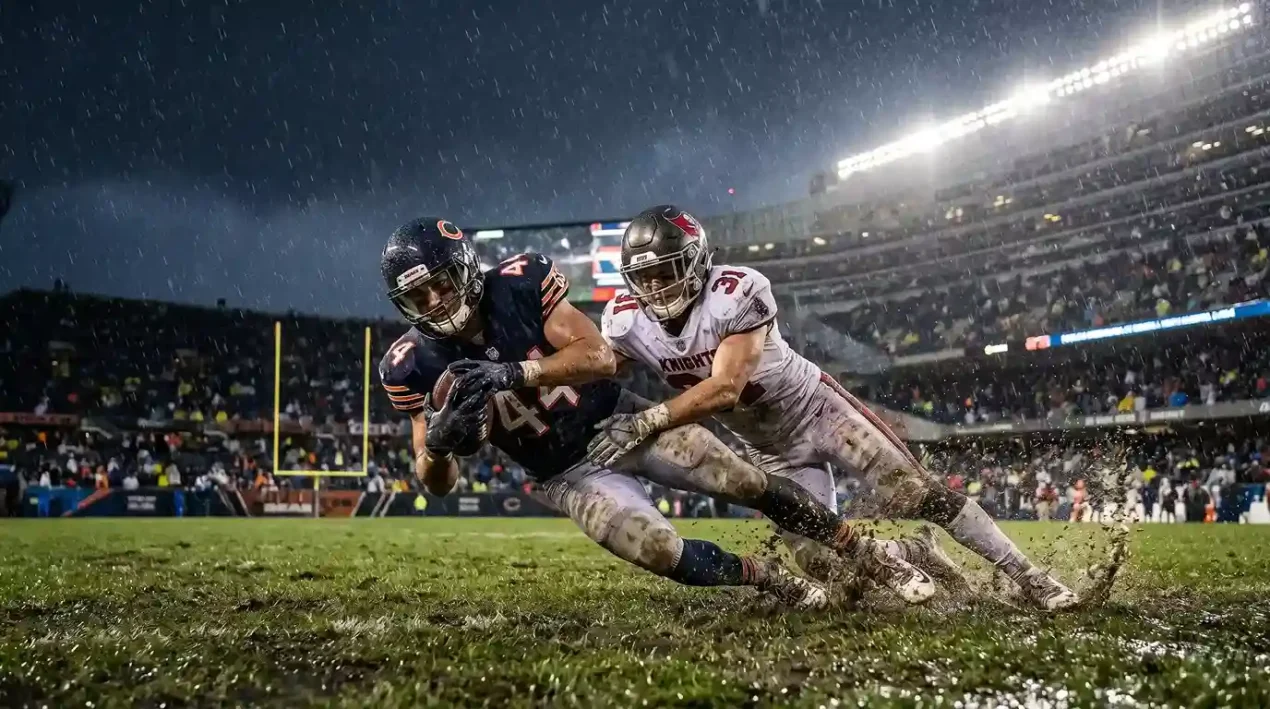
I learned the weather lesson the hard way. Week 12 of a season a few years back, I backed a wide receiver for anytime TD in a game where 25-mph gusts were forecast. The quarterback completed fewer than half his passes, the offence rushed the ball on nearly 60% of plays, and my receiver finished with three catches for 22 yards. No touchdown. The running back on the same team scored twice. That was the game that made me add a weather check to my pre-bet routine, and it hasn’t left the checklist since.
Weather affects touchdown distribution in ways that are predictable enough to incorporate into your analysis but subtle enough that many punters — and some bookmakers — don’t adjust for them adequately. The NFL plays outdoors in stadiums across climate zones from September through February, and the conditions at kickoff can fundamentally alter which positions are likeliest to score.
Wind and Its Effect on Passing Touchdowns
Wind is the weather variable that matters most for TD props. Sustained winds above 15 mph degrade passing accuracy, reduce deep ball attempts, and compress the offence toward shorter routes and run plays. The effect on touchdown distribution is direct: fewer passing touchdowns, more rushing touchdowns.
When I identify a game with significant wind in the forecast, I shift my TD analysis toward running backs and away from wide receivers. This isn’t a hunch — it’s grounded in how offences respond to wind. Coaches know that deep passes in high wind are low-percentage throws, so they dial back the aggressive downfield passing that produces many receiver touchdowns. What remains is a more condensed offensive approach: runs between the tackles, short passes to tight ends, and quarterback sneaks at the goal line. With 86.6% of all rushing touchdowns originating from inside the red zone, wind games push even more scoring into the ground game’s territory by funnelling offences into run-heavy approaches once they reach the red zone.
The threshold I use is 15 mph sustained wind at kickoff. Below that, the effect on passing is minimal. Above 20 mph, the impact becomes severe enough that I avoid all WR TD props unless the receiver is on a dome-like short route that isn’t affected by wind. Between 15 and 20, I reduce my confidence in passing TD plays by roughly half and look for compensating factors like a mobile quarterback who might score a rushing TD instead.
Rain, Snow, and the Shift to Rushing TDs
Precipitation compounds the wind effect but also introduces a separate factor: ball security. Rain and snow make the football harder to grip, which increases fumble risk and makes quarterbacks reluctant to throw into tight windows. The result is predictable — offences lean even harder on the run game, and the scoring distribution shifts further toward running backs.
Snow games are particularly interesting for TD props because they can produce highly unusual scoring patterns. Heavy snowfall slows down defensive pursuit and makes tackling less reliable, which can actually increase the total number of touchdowns scored — but those touchdowns skew heavily toward the ground game. A back who breaks through the first level of defence in snow can find extra yardage because defenders can’t change direction as effectively. This creates a counter-intuitive situation where the game total might stay high despite the weather, but the method of scoring shifts dramatically.
Rain without wind is the mildest weather factor. Light rain on its own doesn’t significantly alter TD distribution, though heavy rain (sustained downpour) begins to affect grip and footing enough to favour the run game modestly. I only adjust my TD analysis for rain if the forecast calls for heavy or sustained precipitation, not for light showers. The NFL average of 18.7 million viewers per game means weather conditions are widely discussed in pre-game coverage, but most of that commentary focuses on game totals rather than how the weather specifically reshapes which positions score — that’s where the analytical edge lives.
Dome Games vs Outdoor: Scoring Differences
Eight NFL teams play their home games in domed or retractable-roof stadiums, and the controlled environment creates a measurably different scoring landscape. Dome games eliminate weather as a variable entirely, which stabilises passing efficiency and makes receiver TD props more reliable than in outdoor games.
The practical implication is straightforward. When a game is played in a dome, I treat it as a neutral-weather environment and base my TD analysis entirely on player usage, matchup quality, and odds value. The standard relationship between positions and scoring applies: receivers have their normal probability of scoring, running backs have theirs, and there’s no need to adjust for external conditions.
Where this gets interesting is when a team that plays in a dome travels to an outdoor stadium in cold or windy conditions. Dome teams sometimes struggle to adjust to outdoor elements, and their passing game — which operates in climate-controlled perfection for eight home games — can be less efficient in wind or cold than its season-long statistics suggest. A receiver on a dome team playing an outdoor road game in December is a slightly riskier TD prop than his numbers alone indicate. The reverse applies too: outdoor teams visiting domes get a small boost to their passing efficiency, which can make game script predictions slightly more pass-friendly than the surface-level matchup suggests.
Building Weather Into Your Weekly Routine
Weather shouldn’t dominate your TD analysis, but ignoring it entirely means leaving information on the table. My weekly routine adds one step on Saturday afternoon: I check the forecast for every outdoor game I’m considering, flag any game with 15+ mph wind or heavy precipitation, and adjust my position preferences accordingly.
The adjustment is binary, not nuanced. In weather-affected games, I lean toward running back TD props and away from receiver TD props. In dome games and mild-weather outdoor games, I proceed with my standard analysis unchanged. That simple filter has saved me from placing dozens of receiver TD bets that had no realistic chance of hitting due to conditions that were publicly available but rarely priced into the market until very close to kickoff.
The final check is timing. Weather forecasts become meaningfully more accurate within 48 hours of kickoff. A forecast showing high wind on Wednesday might change by Saturday. I base my weather adjustments on Saturday afternoon forecasts for Sunday games and on the latest available data for Thursday and Monday games. Early-week forecasts are too unreliable to influence betting decisions.
Should I avoid passing TD props in high-wind games?
In games with sustained wind above 15-20 mph, reducing or eliminating wide receiver TD bets is prudent. Wind degrades passing accuracy and reduces deep ball attempts, which directly lowers the probability of passing touchdowns. Running backs and tight ends who run short routes become better TD candidates in windy conditions. Check the forecast on Saturday for Sunday games rather than relying on early-week predictions.
Do dome teams score more touchdowns than outdoor teams?
Dome teams tend to have slightly higher passing efficiency at home, which can translate to more passing touchdowns in their home games. The controlled environment eliminates weather variability and supports consistent offensive execution. However, when dome teams travel to outdoor stadiums in poor conditions, their passing efficiency can decline more sharply than teams accustomed to outdoor play, which affects their TD prop value on the road.
This material was created by the Endzone Edge team.
Related posts
NFL Playoff Touchdown Props: How Postseason Football Changes the TD Equation
NFL TD Prop Record Keeping: How to Track Your Bets and Measure Your Edge