Last Touchdown Scorer Bets: Late-Game Clock Dynamics
 Available in US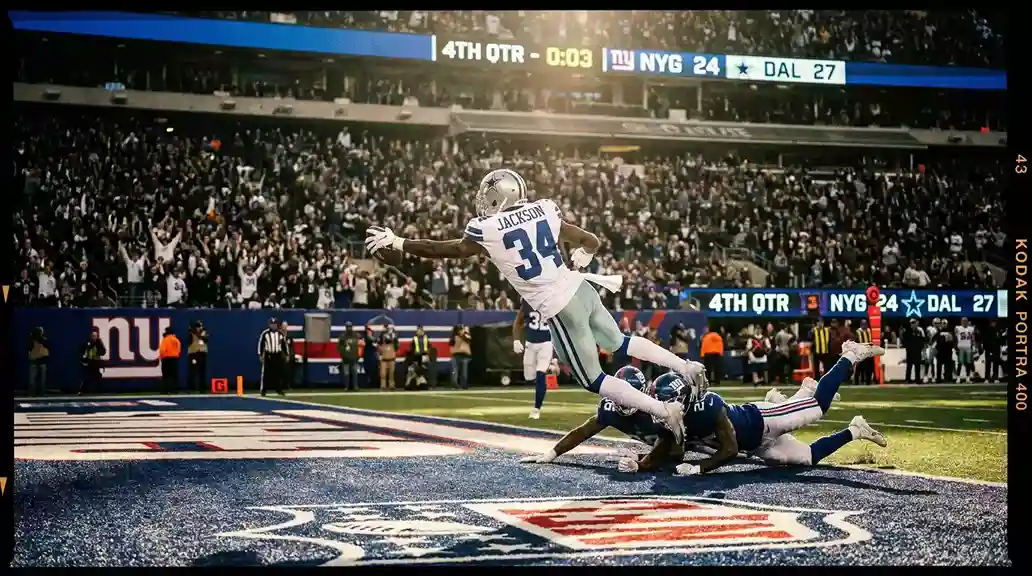
Last TD scorer props tend to attract less attention than first TD or anytime TD, and that relative obscurity works in our favour. Less public money means less market pressure, which means more room for odds to be slightly off. Combine that with a structured approach to predicting late-game flow, and you’ve got a market that rewards homework.
Fourth Quarter Scoring Trends and Clock Impacts
I spent an off-season cataloguing the final touchdown of every NFL game across two full seasons. The patterns were clearer than I expected. In close games — those decided by seven points or fewer — the last touchdown overwhelmingly came from a passing play, often a receiver running a route designed to beat a defensive back playing cautious prevent coverage. In blowouts, the last score was far more likely to be a rushing touchdown by a backup running back with the starters already on the bench.
Clock dynamics drive these patterns. When a team is trailing late in the fourth quarter, it abandons the run game almost entirely. The offence goes to hurry-up mode, spreads receivers across the formation, and throws on nearly every down. That means the final touchdown in a competitive game disproportionately goes to wide receivers and pass-catching running backs rather than traditional rushers.
Conversely, when a team builds a large lead, the fourth quarter becomes a clock-management exercise. The leading team runs the ball to burn clock, uses backup personnel, and avoids the pass plays that might lead to turnovers. If the trailing team scores a late garbage-time touchdown, it’s often through second-string defenders who have replaced the starters. Understanding which phase a game is likely to enter in the fourth quarter is the starting point for any last TD analysis.
Garbage Time: Hidden Opportunities for Last TD
The concept of “garbage time” gets dismissed by casual bettors as meaningless, but for last TD props, it’s the entire game. A garbage-time touchdown is still a touchdown, and the player who scores it still wins the last TD market. I’ve won bets on backup running backs who scored with two minutes remaining in 35-10 games. The score didn’t matter to anyone watching for entertainment. It mattered to me.
Garbage-time touchdowns follow their own logic. The trailing team, down by three or more scores, throws aggressively against a defence playing soft coverage. The completion percentage goes up, the yards come easy, and eventually someone finds the end zone. The receivers and backs who benefit from garbage-time scoring are often the same players who would score in competitive game flow, but not always — some teams rest starters in garbage time, giving second-string receivers and backs opportunities they wouldn’t normally see.
The key insight for last TD betting is that projected blowouts create specific types of garbage-time scorers. If the spread is 14 points, the underdog’s passing targets in the second half become your last TD candidates. Those players are often priced at long odds because the market doesn’t fully account for the structured nature of garbage-time scoring. The Super Bowl era has become increasingly pass-heavy, with five of the seven touchdowns in the most recent championship going to receivers — a trend that intensifies in late-game and garbage-time situations.
Blowouts vs Close Games: Who Scores Last
The game’s projected margin tells you which type of last-TD candidate to target. I split games into three categories and adjust my approach for each.
In projected close games (spread of three points or less), the last touchdown is unpredictable. Either team could score, and the method — pass or run — depends on the specific game situation. I typically avoid last TD props in these games unless a clear pattern emerges from the teams’ fourth-quarter tendencies. The variance is simply too high to bet with confidence.
In moderate-margin games (spread of four to ten points), the last touchdown usually comes from the trailing team mounting a late rally. Receivers on the team expected to trail are strong candidates, particularly those with high target shares in the two-minute offence. These games offer the best combination of predictability and value for last TD bets.
In projected blowouts (spread of eleven points or more), the last score often comes from the winning team running out the clock with backup personnel. Backup running backs on the favoured team become surprisingly viable last TD candidates, often priced at 10.00 or longer. The risk is that the trailing team might score a late desperation touchdown instead, but in true blowouts, the winning team’s ground game typically has the final word.
86.6% of rushing touchdowns come from inside the red zone, and late-game rushing touchdowns are no exception. When the winning team is grinding clock, those carries inside the five-yard line often come from fresh-legged backup backs who haven’t played much earlier in the game. Their odds rarely reflect this specific role.
Timing and Patience: The Last TD Bettor’s Advantage
One tactical advantage of last TD betting is that odds often remain available longer than first TD or anytime TD. Because the market attracts less handle, bookmakers are slower to adjust lines in response to news. Injury updates that drop on Saturday morning might immediately move anytime TD odds but leave last TD odds untouched for hours. That window gives you time to react to information before the market catches up.
I also find that live betting offers an underexplored angle for the last TD market. Some UK bookmakers offer “next touchdown scorer” bets during the game, and as the fourth quarter unfolds, you can see the game script developing in real time. If a team is down by twenty and the starters are being pulled, the next TD scorer bet effectively becomes a last TD bet at that point. Reading the game flow and placing the bet when the situation is clearest, rather than trying to predict it hours before kickoff, can improve your hit rate meaningfully. This is one area where understanding first touchdown scorer dynamics provides useful contrast — the first and last scores in a game are shaped by entirely different forces.
Does overtime affect last touchdown scorer bets?
Yes. If a game goes to overtime and a touchdown is scored, that score becomes the last touchdown of the game. This can work in your favour if your selected player’s team has the ball in overtime, but it adds an additional layer of unpredictability. Most UK bookmakers include overtime in their last TD scorer settlement rules, but always verify with your specific bookmaker before placing the bet.
Which player types are most likely to score the last TD?
It depends on the game’s margin. In close games, wide receivers and pass-catching backs on the trailing team are the most common last TD scorers because late-game drives tend to be pass-heavy. In blowouts, backup running backs on the winning team often score the final touchdown as their team runs out the clock. Matching the expected game flow to the right player profile is the foundation of last TD analysis.
This material was created by the Endzone Edge team.
Related posts
NFL Playoff Touchdown Props: How Postseason Football Changes the TD Equation
NFL TD Prop Record Keeping: How to Track Your Bets and Measure Your Edge