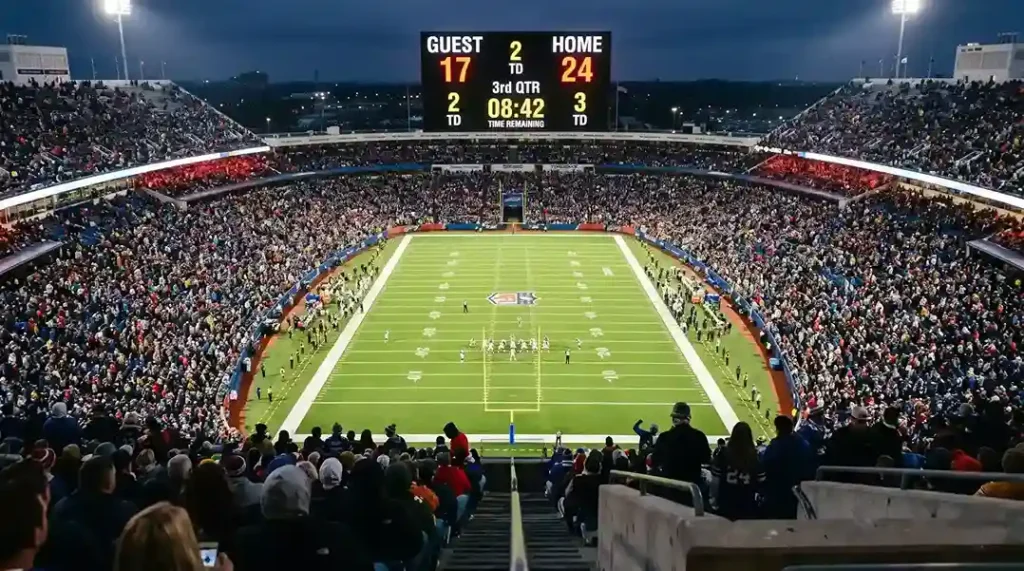
NFL Playoff Touchdown Props: How Postseason Football Changes the TD Equation
 Available in US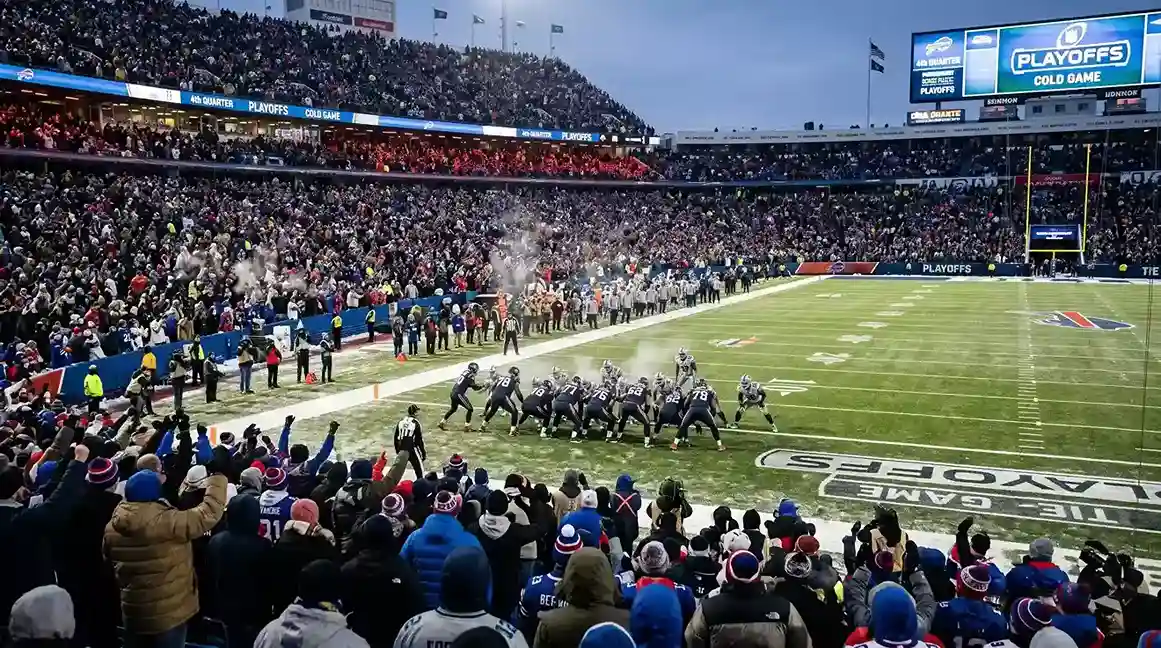
The first time I applied my regular-season TD betting framework to a playoff game without any adjustments, I went 0 for 4. Every pick was defensible based on season-long data — strong players, good matchups, fair prices. But the games played differently than I’d anticipated. Tighter. More conservative. Fewer scoring opportunities than the regular-season averages had led me to expect. That 0-for-4 weekend taught me that the playoffs aren’t just the same games with higher stakes — they’re a structurally different product, and the TD prop analysis needs to adjust accordingly.
Why Playoff Games Produce Fewer Touchdowns
Playoff teams are, by definition, the best teams in the league. That means the defences you encounter in the postseason are, on average, significantly better than the defences you’ve been analysing all season. The bottom third of the league’s defences — the units that inflated regular-season TD rates — are sitting at home. What remains is a concentrated pool of high-quality defensive units that are harder to score against.
The data reflects this. Regular-season NFL games average roughly 5.5 touchdowns per game across the league. Playoff games have historically averaged closer to 4.5-5.0, with the reduction concentrated in the earlier rounds where defensive matchups tend to be most competitive. By the Conference Championships and Super Bowl, scoring can bounce back as the best offences face the best defences and the offensive talent sometimes prevails. The NFL draws an average of 18.7 million viewers per regular-season game — playoff games draw substantially more, and the intensity those viewers see translates into measurably different on-field behaviour that affects scoring.
The other factor is game planning. Regular-season preparation is constrained by the weekly schedule — coaches have limited time to install new schemes and adjust to each opponent. Playoff preparation is more thorough. Defensive coordinators have an extra week (during the bye round) or the full regular-season film library to identify and attack offensive tendencies. This elevated preparation reduces offensive efficiency, particularly in the red zone, where defensive recognition of offensive patterns becomes more impactful. The Philadelphia Eagles’ 70.97% red-zone touchdown conversion rate during the 2025 regular season, for instance, typically faces sharper resistance in January than it does in October.
Coaching Adjustments and Reduced Red-Zone Efficiency
Playoff coaching is more conservative than regular-season coaching, particularly in the early stages of games. Coaches know that turnovers in elimination games are catastrophic, which leads to more conservative play calling in scoring situations. The aggressive fourth-down attempts and creative red-zone plays that characterise regular-season football give way to field goals and safe throws in the playoffs, at least until game script forces a trailing team to open things up.
This conservatism directly reduces red-zone touchdown efficiency. More field goals mean fewer touchdowns per red-zone possession. For TD props, the effect is meaningful: a player’s regular-season TD rate per game overstates his playoff TD probability because the coaching framework around him has shifted. The same player with the same usage in the same matchup will score fewer touchdowns per opportunity in a playoff context than he would in the regular season, purely because of coaching risk aversion.
There’s also a personnel dimension to playoff coaching adjustments. Teams that rotate heavily at running back during the regular season often consolidate touches in the postseason, giving their best back a larger share of goal-line carries. This concentration effect can partially offset the overall scoring reduction for the primary back while further diminishing the TD probability of secondary runners. If you’ve been backing a team’s RB2 for TD props during the season because of his goal-line role, verify that his involvement persists into the playoffs — coaches frequently simplify their personnel packages when the stakes rise, and the RB1 often absorbs those short-yardage snaps.
The adjustment I make is simple. For playoff TD props, I reduce my estimated scoring probability by approximately 10-15% relative to the regular-season baseline. If a running back’s regular-season analysis suggests a 50% anytime TD probability, I discount that to 42-45% for a playoff game. This adjustment accounts for both the higher quality of defence and the coaching conservatism that characterises elimination football. If the bookmaker’s implied probability is below my adjusted estimate, the bet still has value. If the implied probability sits between my regular-season and playoff-adjusted estimates, the regular season would have made it a bet but the playoff context makes it a pass.
How Bookmakers Adjust TD Odds for Playoffs
Some bookmakers adjust their playoff TD pricing to reflect the structural differences in postseason football. Others don’t — they essentially apply regular-season pricing models to playoff games, which creates identifiable mispricing. Knowing which bookmakers adjust and which don’t helps you target your line shopping.
The bookmakers that do adjust tend to lengthen TD odds slightly across the board for playoff games, reflecting the expected reduction in scoring. The adjustment is typically modest — 5-10% longer odds compared to what the same player-matchup combination would produce during the regular season. If you see a player priced at 2.50 for a playoff game when your model suggests 2.30 would be the correct regular-season price, the bookmaker has already built in some playoff discount.
The bookmakers that don’t adjust — or don’t adjust enough — are where the most interesting playoff TD bets arise, and they tend to be the ones worth avoiding. If a bookmaker hasn’t lengthened their odds for the playoff context, they’re effectively offering regular-season pricing for a game with fewer expected touchdowns. The implied probability is too high, and the bet is negative EV even if the player and matchup look attractive on paper. Conversely, if you find a bookmaker whose playoff adjustment overshoots — lengthening odds more than the data justifies — the overcorrection creates value on the other side.
Public money plays a larger role in playoff pricing than during the regular season. Casual bettors flood the market for high-profile postseason games, backing star players at whatever odds are available. This volume of uninformed money can push lines on popular players below fair value, while less prominent players on the same team remain underpriced because the public doesn’t know or care about the backup running back’s goal-line role. The contrarian approach — fading the most popular names and looking for secondary scorers whose odds haven’t been compressed by public action — tends to be more productive in the playoffs than during the regular season precisely because the imbalance in betting volume is more extreme.
The ultimate expression of playoff TD betting is the Super Bowl itself, where all of these dynamics — defensive quality, coaching conservatism, public money distortion — converge into a single game that attracts more betting volume than any other. For a deeper look at how to approach that specific fixture, the analysis of Super Bowl touchdown scorer odds covers the dynamics unique to the championship game.
Do NFL playoff games have lower scoring than regular-season games?
On average, yes. Playoff games feature better defences, more thorough coaching preparation, and more conservative play calling — all of which reduce touchdown scoring relative to the regular season. The effect is most pronounced in the Wild Card and Divisional rounds, where defensive matchups tend to be most competitive. Conference Championship and Super Bowl scoring varies more widely.
Should I adjust my TD prop strategy for the postseason?
Absolutely. Reduce your estimated scoring probabilities by 10-15% to account for stronger defences and more conservative coaching. Be more selective with your picks, and verify whether your bookmaker has already adjusted their playoff pricing. If the odds look the same as they would during the regular season, the bookmaker may not have accounted for the structural scoring reduction, which means the implied probability is too high.
This material was created by the Endzone Edge team.
Related posts
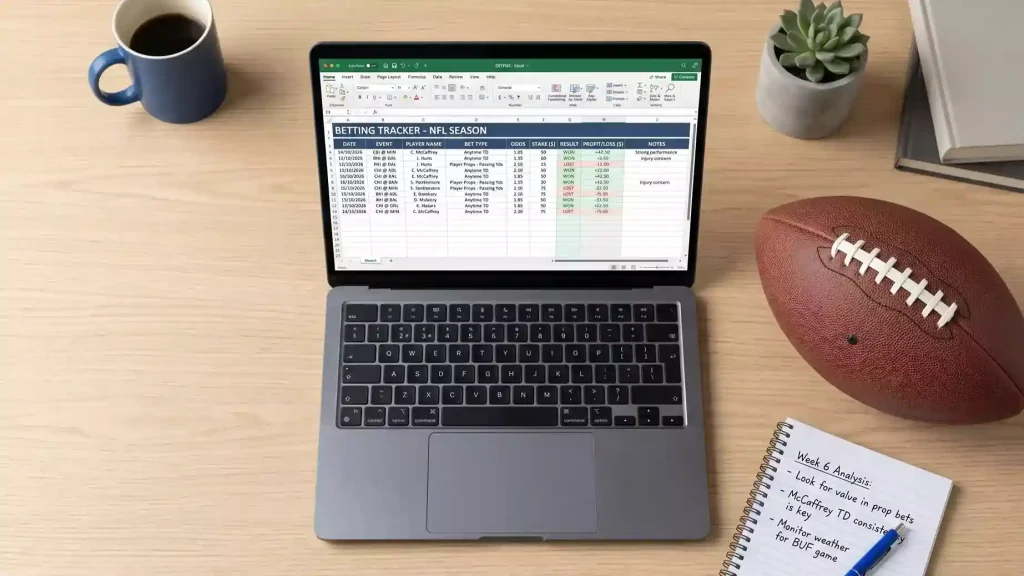
NFL TD Prop Record Keeping: How to Track Your Bets and Measure Your Edge

NFL TD Props Live Betting: How to Find Value in In-Play Touchdown Markets